
By Jessica Parnham
Head of Marketing and Content Strategy
In October 2025, the Health & Safety Executive (HSE) updated its guidance on RPE fit testing. Despite no new legislation being introduced, the revised guidance significantly reduces the grey areas around repeat testing and long-term RPE management. For many organisations, particularly those with large or operationally demanding teams, this clarification has immediate practical implications.
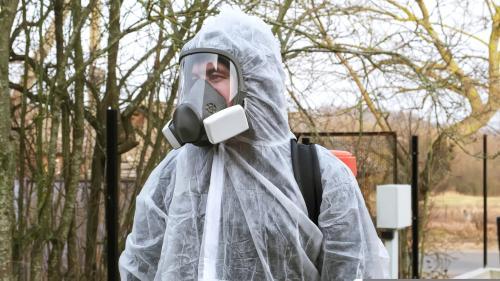
Respiratory protective equipment (RPE) is a critical control measure in high-risk working environments. Where tight-fitting masks such as half masks or full-face breathing apparatus are used, their effectiveness depends entirely on achieving and maintaining a secure seal to the wearer’s face. If that seal is compromised, the level of protection can fall sharply.
The updated guidance reinforces this principle by making it clear that employers are expected to take a more active role in ensuring that RPE remains effective over time. This places greater emphasis on how fit testing is reviewed and monitored.
Repeat Fit Testing
Primarily, the updated HSE guidance reinforces that RPE fit testing is not a one-off exercise carried out at the point of issue, but an ongoing employer responsibility. As part of an effective RPE programme, the HSE advises it is good practice for employers to have a system in place to review when a repeat fit test may be required.
The guidance states that a fit test should be repeated where there is a change to the RPE type, size, model, or material, or where there is a change to the wearer’s circumstances that could affect the face seal. Examples given by the HSE include:
- weight loss or gain;
- substantial dental work;
- any facial changes around the face seal area such as scars, moles, or ageing;
- facial piercings;
- the introduction or change of other head-worn PPE, such as safety helmets, face shields, hearing protection, or eye protection.
Why Re-testing is Necessary
The HSE’s updated guidance places greater emphasis on the fact that RPE fit testing only provides assurance at a specific point in time, rather than a lifetime guarantee. Even where there are no obvious triggers for re-testing, fit can change as working practices evolve and equipment remains in service over extended periods of time.
For example, over time and with repeated use, RPE can degrade or deform even where it appears visually intact and has been maintained in line with manufacturer guidance. In physically demanding roles, factors such as sustained exertion, movement, and heat can further increase the likelihood of inward leakage. The HSE notes that this risk can still arise with tight-fitting powered or constant-flow airline RPE, where studies have shown that positive air pressure alone does not eliminate the potential for inward leakage during heavy exertion.
As a result, reliance on historic fit test records cannot provide adequate assurance that RPE remains effective. Routine re-testing carried out at planned intervals provides a practical and proportionate way for employers to maintain confidence in protection levels and demonstrate ongoing compliance.
Qualitative vs Quantitative Testing
The HSE guidance continues to recognise both qualitative and quantitative fit testing methods and sets out where each is appropriate. The choice of method should be determined by the type of RPE in use and the level of assurance required:
- Qualitative fit testing is a pass or fail method based on the wearer’s subjective detection of a test agent, such as a bitter or sweet aerosol. HSE guidance limits its use to disposable and reusable half masks, as it does not provide a sufficiently reliable indication of face seal integrity for full-face masks. As with all fit testing, it must be carried out by a competent fit tester using an appropriate method.
- Quantitative fit testing provides an objective, numerical measure of face seal performance and is suitable for a wider range of RPE, including both half masks and full-face masks. It is the only fit testing method considered appropriate for full-face RPE, as it does not rely on wearer perception and can measure very low levels of leakage.
For organisations managing large teams or higher-risk roles, quantitative fit testing provides a higher level of confidence and consistency, particularly where routine re-testing is required. This is because use of measurable results supports comparison over time and strengthens audit defensibility. However, quantitative fit testing also introduces additional planning, resource, and coordination considerations for organisations to navigate.
Operational Challenges
As expectations around repeat fit testing become clearer, many organisations are reviewing how their RPE programmes operate in practice. Delivering fit testing at scale requires careful planning, particularly where workforces are large, geographically dispersed, or operating under time-critical conditions.
Operational considerations typically include coordinating fit testing programmes in a way that maintains operational availability, particularly where staff are deployed across multiple sites or shifts. Employers may also need to manage different fit testing requirements for half masks and full-face masks across varied roles, ensuring the correct method is applied to each type of RPE. Underpinning this is the need to ensure fit testing is carried out by qualified personnel, using methods appropriate to the equipment in use, so that results remain reliable.
Alongside practical delivery, repeat fit testing places greater emphasis on how results are recorded and managed over time. Where routine testing is carried out, employers must be able to demonstrate that fit testing has not only taken place, but also that records remain accurate and traceable as part of the wider RPE programme. This involves ensuring reports are accessible, retained for appropriate periods, and robust enough to support regulatory inspection or internal audit.
Addressing these challenges is therefore less about meeting new requirements and more about putting well-structured arrangements in place. With the right approach, repeat fit testing can be integrated into existing occupational hygiene and health and safety systems without unnecessary disruption.
How Envirochem Can Help
The updated HSE guidance has not changed the law, but it has clarified what is expected of employers where RPE is in use. For many organisations, this brings a renewed focus on whether existing fit testing arrangements continue to provide meaningful assurance, particularly where historic testing has not been revisited for several years.
Envirochem supports organisations at this point of review as an experienced provider of RPE fit testing services, including quantitative face fit testing carried out by Fit2Fit-qualified professionals. We support organisations of all sizes meet regulatory expectations whilst maintaining effective RPE programmes across a wide range of sectors.
Because we deliver a wide range of occupational hygiene services through highly qualified occupational hygienists, we understand how face fit testing fits within broader risk assessment, exposure control, and compliance obligations. This means that in line with HSE’s guidance, our fit testing is planned and delivered as part of a coherent RPE and risk management strategy, rather than as a standalone exercise.
If your organisation is reassessing its approach to RPE fit testing, Envirochem can help. Learn more about our face fit testing services or contact our team to discuss your requirements.
Author

Related Content

How can we help?
Contact UsWebsite Privacy Policy - Privacy Notice - Terms & Conditions
© Envirochem Analytical Laboratories Ltd
Reg. No. 2378228 England