
By Jessica Parnham
Head of Marketing and Content Strategy
In recent years, the term “forever chemicals” has become increasingly common in discussions around pollution and public health. The name refers to per- and polyfluoroalkyl substances, otherwise known as PFAS, which are a large family of synthetic chemicals that have been used extensively across consumer products and industrial processes because of their resistance to heat, water, and oil.
However, these properties also mean that some PFAS can pollute the environment for hundreds of years after their original use. As our understanding of their persistence has grown, attention has increasingly turned to sites where PFAS may have been used or released in the past, including contamination that may never have been investigated. Improved monitoring is now helping to identify these legacy issues, and regulators are paying closer attention to how PFAS contamination should be assessed and managed.
For businesses involved in land development or waste management, understanding where PFAS may be present and whether historic activities could have created a contamination risk is therefore becoming increasingly important, both for environmental risk assessment and for managing potential project costs and liabilities.
What Are PFAS?
PFAS are a group of man-made chemicals characterised by exceptionally strong bonds between carbon and fluorine atoms. These bonds make many PFAS highly resistant to degradation, allowing them to withstand conditions that would break down other chemical compounds.
This durability is what makes PFAS extremely useful, and manufacturers continue to use them to create surfaces and materials capable of repelling grease or moisture. As a result, PFAS are found in a wide range of applications, such as non-stick cookware and water-resistant textiles, food packaging, paints, cleaning products, and some cosmetics.
How PFAS Contamination Can Occur
Key sources of PFAS contamination are sites where PFAS-containing materials and products have been manufactured, where chemicals released during industrial processes can contaminate the surrounding soil. Firefighting foams are another commonly recognised source of PFAS contamination, particularly where they are used at airports and other facilities where fire risks involving flammable liquids are present. Where PFAS-containing foams are used during training, testing or emergency incidents, they can be discharged directly onto the surrounding land.
Disposal can also extend the legacy of PFAS chemicals beyond their original place of use. PFAS-containing materials have historically entered landfill alongside other waste, including at sites that were not designed with these persistent contaminants in mind. As our understanding of PFAS has developed, greater attention is now being paid to how affected waste should be identified and managed.
For landowners and developers, this makes the previous use of a site increasingly important when assessing potential contamination. Even where PFAS are no longer being used, historic activity or waste disposal can leave contamination that may need to be considered before land is redeveloped or disturbed.
The UK Regulatory Landscape
This growing awareness is now being reflected in environmental regulation and guidance. The Environment Agency, England’s environmental regulator, is currently using its National Risk Screening Project to identify potential PFAS sources and areas where more detailed investigation may be appropriate, and is expected to identify more than 10,000 potentially contaminated sites in England.
In February 2026, the UK Government also published its first dedicated PFAS Plan, setting out how it intends to strengthen the identification and management of PFAS pollution. This includes developing technical guidance for regulators and industry on dealing with legacy PFAS contamination through the planning system and existing contaminated land regimes.
Regulatory controls are also developing around the continued use of PFAS. Several individual compounds are already restricted under legislation covering persistent organic pollutants, whilst further controls are being considered through UK REACH. Following a public consultation on proposed restrictions between August 2025 and February 2026, the Health and Safety Executive (HSE) published its final Risk Assessment Opinion in July 2026, concluding that restricting the sale and use of PFAS in firefighting foams would be an appropriate measure to reduce environmental risks. A separate consultation on the socioeconomic impacts of the proposed restriction closed in September 2026, and will inform HSE’s final opinion before the Government decides whether to introduce the restriction.
Together, these developments show that the way PFAS are regulated in the UK is continuing to change. As those expectations develop, they are also becoming increasingly relevant to the businesses responsible for affected land and materials.
What This Means for Businesses
For landowners and developers, the key consideration is how PFAS could affect decisions made during a project. If contamination is identified after work has begun, further investigation may be required before decisions can be made about remediation or excavation of affected soil. This can introduce additional costs and delays that may not have been accounted for at the outset.
PFAS can also create questions around responsibility for contaminated land. Under the existing statutory regime, liability for remediation can extend to those who caused or knowingly permitted contamination, whilst landowners or occupiers may also become responsible depending on the circumstances of the site.
For businesses redeveloping or managing land, this places greater importance on identifying potential PFAS risks early enough for them to be properly investigated and factored into project planning. Where a site’s history indicates that PFAS contamination may be present, appropriate assessment can help establish whether further investigation or testing is required before work progresses.
How Envirochem Can Help
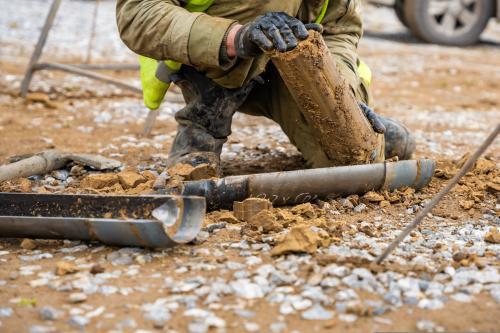
With more than three decades of experience in environmental chemical testing, Envirochem supports developers and contractors assessing contaminated land across the UK. Our team can help establish appropriate testing requirements based on the history of the site and the needs of the project.
Where PFAS may be relevant, we can incorporate PFAS into the analytical programme and arrange appropriate specialist analysis. Other persistent contaminants, including dioxins and furans, can also be included where the site history indicates that they may be a concern.
The resulting data can then be considered alongside the wider contamination profile of the site, helping clients build a clearer understanding of the conditions present and determine whether any further investigation or action is required.
To learn more about our chemical testing and contaminated land capabilities, visit our Chemical Testing services page or get in touch with one of our experts today
Author

Related Content


How can we help?
Contact UsWebsite Privacy Policy - Privacy Notice - Terms & Conditions
© Envirochem Analytical Laboratories Ltd
Reg. No. 2378228 England